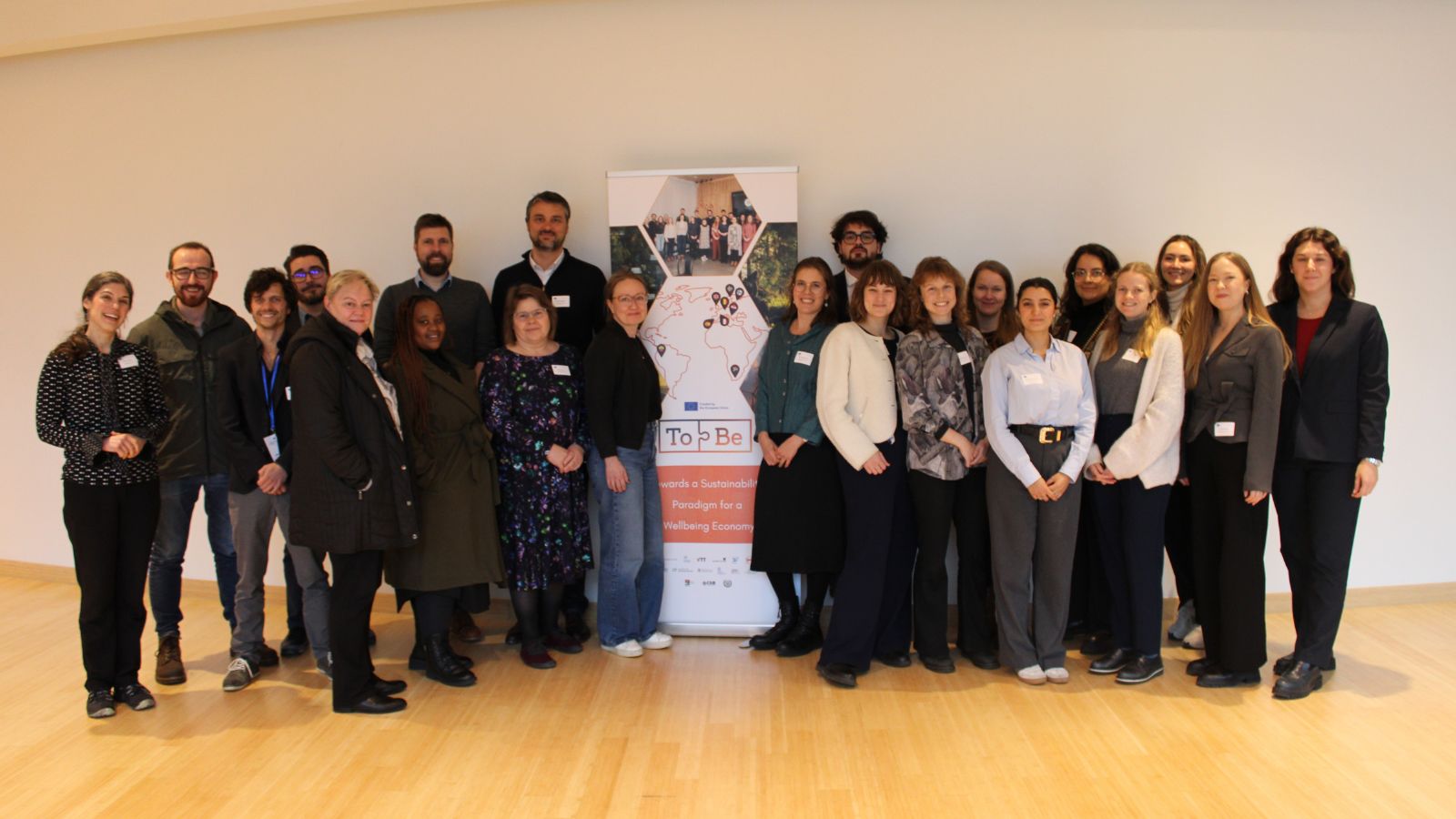
At a moment when ecological limits, widening social inequalities and declining democratic trust are increasingly shaping Europe’s political and economic landscape, the Horizon Europe projects ToBe and SPES convened for their joint Final Conference, “Placing Sustainable and Inclusive Wellbeing at the Heart of the Economy: From Research to Transformative Policy”, on 14–15 January 2026 in Brussels. Bringing together leading researchers, policymakers, EU and UN representatives, and civil society actors, the conference provided a space to reflect on how Europe can move beyond growth-centred economic paradigms and reorient policy towards sustainable and inclusive wellbeing.
Across two days of high-level dialogue, a central concern repeatedly emerged: despite decades of economic growth, Europe is struggling to both ensure decent living conditions for all and to stay within planetary boundaries. Indeed, speakers highlighted that GDP growth has failed to guarantee social progress, as rising productivity has coexisted with growing inequalities, housing crises, precarious work, and mounting ecological damage. As Benedetta Scuderi (MEP) put it during the opening session: “When did we reach the point that the economy is for making people richer instead of making people’s lives better? That is the purpose of politics and the economy”. This framing set the tone for discussions that questioned not only how progress is measured, but what economic systems are ultimately for.
A major focus of the conference was the need to move beyond GDP as the dominant compass for policymaking. Contributions from research and policy alike underlined that GDP remains a narrow and insufficient indicator as it fundamentally ignores environmental degradation, unpaid care work, social cohesion and inequalities. Drawing on the work of ToBe and SPES, speakers discussed how wellbeing-oriented indicators and dashboards can better reflect what matters for people’s lives, while also supporting more coherent policymaking across social, environmental and economic domains. Enrico Giovannini, speaking about the work of the UN High-Level Expert Group on Beyond GDP, stressed that the challenge is no longer a lack of evidence or indicators, but rather the need to change the role that GDP plays in decision-making. Rather than eliminating GDP, its significance must be rebalanced within a broader framework of sustainable wellbeing accounts.
Importantly, discussions moved beyond technical measurement issues to address deeper questions of political economy. Several speakers argued that as long as economic governance remains structurally dependent on growth, wellbeing objectives will continue to be subordinated. Research presented during the conference highlighted the growing tension between growth-based models and the biophysical realities of climate change, biodiversity loss and resource depletion. In this context, post-growth and degrowth perspectives featured prominently, not as ideological positions, but as evidence-based responses to planetary limits. Tuuli Hirvilammi emphasised that sustainable and inclusive wellbeing should be understood as a shared vision encompassing post-growth and degrowth approaches, grounded in sufficiency, relational understandings of wellbeing, and recognition of nature as a precondition for human flourishing.
The limits of “green growth” narratives were also critically examined. Olivier De Schutter, UN Special Rapporteur on Extreme Poverty and Human Rights, challenged the assumption that economic growth can be decoupled from environmental harm, arguing that continued reliance on growth undermines both climate objectives and poverty eradication efforts. He stressed that growth should not be treated as a prerequisite for social investment, pointing instead to alternative fiscal tools, progressive taxation, and reallocation of public resources. He furthermore argued that the growing consensus around new indicators must now translate into changes in modes of production and consumption:
If you fall from an airplane, you don’t need an indicator — you need a parachute.
Beyond macroeconomic debates, the conference also highlighted the importance of fairness, inclusion and democratic participation in any transition towards a wellbeing economy. Contributions from civil society and social partners stressed that climate and social policies will fail if they impose disproportionate costs on those already struggling. Discussions on sufficiency, welfare states and decommodification of essential services underscored that reducing dependency on markets for basic needs can both improve wellbeing and lower pressure for environmentally destructive growth. Parallel sessions further explored how these principles play out in practice, from climate-resilient communities and grassroots innovation to citizen participation, beyond-GDP metrics, and the role of modelling and foresight in navigating uncertain futures.
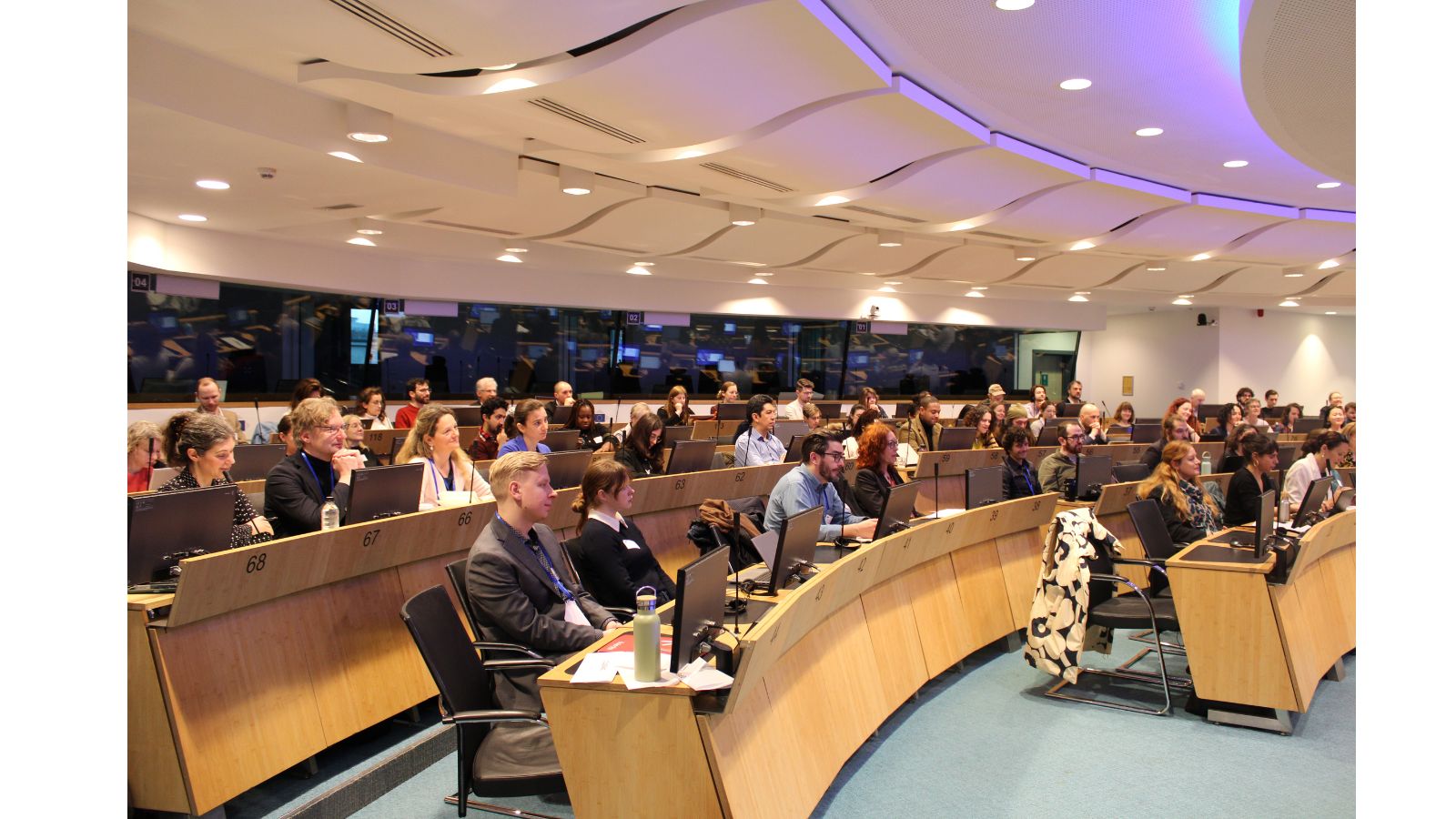
The second day of the conference, hosted at the European Committee of the Regions, reinforced the need to embed wellbeing thinking across levels of governance. Panel discussions addressed intergenerational justice, global inequalities, and Europe’s responsibility in a world where high-income countries account for a disproportionate share of ecological overshoot. Participants stressed that Europe has both the capacity and the normative responsibility to lead in redefining prosperity, not only through indicators, but through concrete policy choices that prioritise long-term wellbeing over short-term economic gains.
All in all, the event marked the culmination of three years of collaborative research conducted by a diverse consortium of partners. Over the course of the projects, researchers have developed conceptual frameworks, empirical evidence, indicators and models aimed at supporting a transition towards sustainable and inclusive wellbeing. The conference provided an opportunity not only to share these findings with key stakeholders, but also to place this vital topic at the heart of policymaking.
Following the conference, the ToBe consortium came together to reflect collectively on the work accomplished, the lessons learned, and the challenges ahead. These reflections underscored the importance of sustained collaboration between research, policy and practice, as well as the need to continue building bridges between academic knowledge and decision-making. While the conference marked an endpoint for the ToBe and SPES projects, it also highlighted that the conversation on wellbeing-centred economies is far from over. As momentum grows around beyond-GDP initiatives and wellbeing frameworks, the task ahead is to ensure that this knowledge is translated into policies capable of delivering a fair, sustainable and dignified future for all.
You may find a more detailed report on the final conference here.